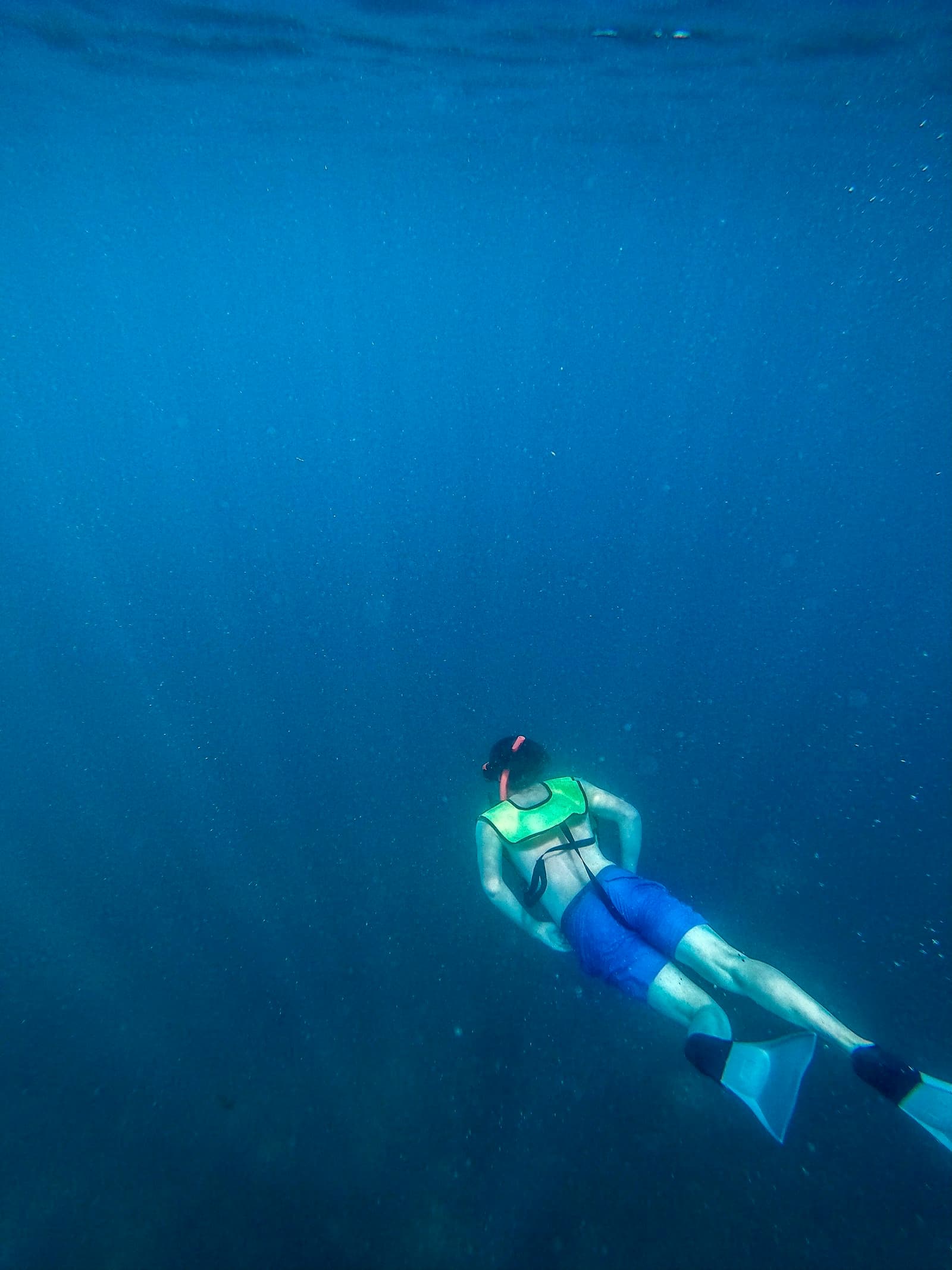
Is Freediving Dangerous? Risks, Statistics & How to Stay Safe
Is freediving dangerous? It's the first question most non-divers ask — and it deserves an honest answer. Yes, freediving carries real risks, including death. But with proper training, the buddy system, and respect for your limits, it's a remarkably safe activity practised by hundreds of thousands of people worldwide. Let's look at the actual risks, the statistics, and how they're managed.
The Honest Risk Assessment
Freediving involves voluntarily holding your breath underwater. If something goes wrong — primarily a blackout — and there's nobody to rescue you, the outcome can be fatal. That's the core risk, and it's important to acknowledge it clearly.
However, context matters. The vast majority of freediving fatalities share common factors:
Diving alone — no buddy to perform a rescue
Hyperventilation before the dive — suppressing the urge to breathe
No formal training — unaware of the risks and safety protocols
Spearfishing and recreational breath-hold — outside the structured freediving community
When these factors are removed — trained divers, following safety protocols, with a buddy — the risk profile changes dramatically. Read our detailed analysis of freediving fatalities.
Freediving's Main Risks
1. Shallow Water Blackout
The most serious risk. During ascent, the partial pressure of oxygen in your blood drops rapidly as water pressure decreases. If it falls below the threshold for consciousness, you black out — typically in the final 5–10 metres before the surface. A blackout in water without rescue is fatal within minutes.
Blackout is survivable with a trained buddy. This is why the buddy system is non-negotiable in freediving. Read our comprehensive guide to shallow water blackout.
2. Equalization Injuries
Descending without properly equalizing the pressure in your ears and sinuses can cause barotrauma — ruptured eardrums, sinus squeezes, or middle-ear injuries. These are painful and can cause temporary or permanent hearing loss. They're almost entirely preventable with proper equalization technique. Learn about equalization and pressure.
3. Lung Squeeze
At extreme depths, even with the blood shift protecting the lungs, aggressive descent or pushing beyond your body's current adaptation can cause pulmonary barotrauma. This is primarily a risk for competitive divers pushing deep boundaries, not for recreational freedivers. Understand the blood shift and lung protection.
4. Nitrogen Narcosis
Beyond approximately 40–50 metres, nitrogen narcosis can impair judgment and coordination. For recreational freedivers who stay above 30 metres, this is not a factor. For deeper divers, narcosis awareness is part of training.
5. Marine Hazards
Currents, entanglement, boat traffic, and marine life encounters are environmental risks shared with all water activities. Proper site assessment and awareness mitigate these.
How Does Freediving Compare to Other Activities?
Putting risk in perspective helps:
Freediving fatality rates in organised, supervised settings are extremely low — comparable to recreational swimming or surfing
Scuba diving has a fatality rate of roughly 1–2 per 100,000 dives
Most freediving fatalities occur outside structured training environments — spearfishing alone, unsupervised pool breath-holding, or untrained ocean diving
Competitive freediving events, with full safety teams, have an excellent safety record
The common pattern in serious incidents is the same: alone, untrained, or ignoring basic safety rules.
How to Manage the Risks
Get Trained
A proper freediving course teaches you the physiology, the risks, the rescue techniques, and the protocols that keep you safe. It's the single best investment you can make. Read about what to expect from your first course.
Always Dive With a Buddy
This is the most important safety rule in freediving. A trained buddy watching your ascent can rescue you from a blackout within seconds, turning a potentially fatal event into a brief, manageable incident. Learn about the freediving buddy system.
Never Hyperventilate
Excessive breathing before a dive blows off CO₂ without adding significant oxygen. This suppresses your urge to breathe, making you feel fine while your oxygen is actually depleting — leading to blackout without warning. Understand the gas dynamics behind this risk.
Progress Gradually
Your body adapts to depth and breath-hold over time. The blood shift develops gradually, equalization skills improve with practice, and CO₂ tolerance builds through consistent training. Rushing this process is how injuries happen. Read about realistic depth progression.
Know Your Limits
Freediving rewards self-awareness. If something feels wrong — difficulty equalizing, unusual breathlessness, discomfort — end the dive. The ocean will be there tomorrow. Ego is the most dangerous thing you can take into the water.
Safety Warning: Never practise breath-holding alone in water — not in the ocean, not in a pool, not in a bathtub. Blackout can occur without warning. Always have a trained buddy present.
So, Is Freediving Dangerous?
Freediving has inherent risks that cannot be eliminated — but they can be managed to an extremely low level. With training, a buddy, gradual progression, and respect for the basics, freediving is one of the most rewarding and accessible water sports in the world.
The danger lies not in the activity itself, but in how it's approached. Untrained, alone, and reckless: dangerous. Trained, supervised, and disciplined: remarkably safe.
Ready to start safely? Check out our safety resources and education guides.
Freediving Safety — Complete Series
- 1Is Freediving Dangerous? Risks, Statistics & How to Stay Safe
- 2Shallow Water Blackout: The Silent Killer in Freediving and Swimming
- 3Freediving Deaths: Causes, Prevention & What We Can Learn
- 4Freediving Safety: The Buddy System - Your Lifeline Underwater