Static Apnea Training Tables: Complete CO₂ and O₂ Guide
Static apnea — holding your breath while motionless — is the foundation of all freediving breath-hold training. Unlike dynamic apnea (swimming underwater) or depth diving, static apnea isolates pure breath-hold capacity without the variables of movement, pressure, or temperature. This guide provides complete CO₂ and O₂ training tables with progressions, safety protocols, and how to integrate them into your training.
What Is Static Apnea?
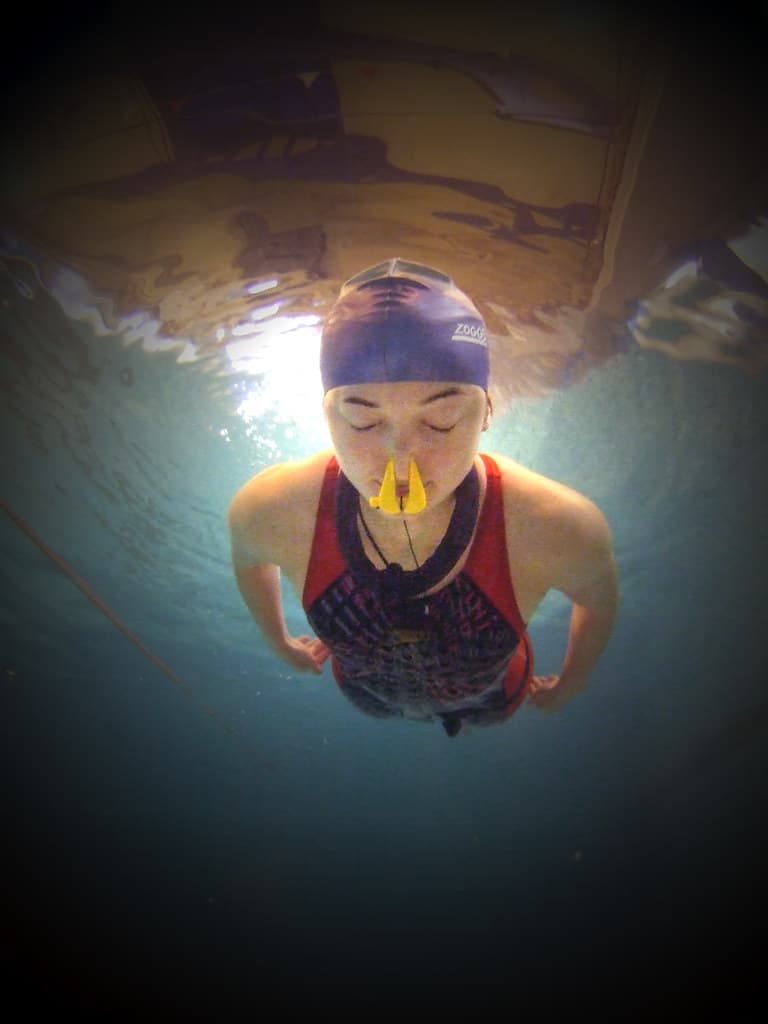
Static apnea (STA) is one of the official pool disciplines in competitive freediving, but it's also the most fundamental training tool for all freedivers. You float face-down in a pool (or sit comfortably on land) and hold your breath for as long as possible.
Why static apnea matters:
Builds CO₂ tolerance — the primary limiter in most breath-holds
Improves mental calm — you learn to stay relaxed through diaphragm contractions
Increases oxygen efficiency — your body adapts to function at lower O₂ levels
Develops body awareness — you learn to recognize your true limits vs perceived limits
Safe and accessible — can be trained in any pool or on dry land with a buddy
Understanding the gas dynamics behind breath-holding is key. Read our guide to oxygen and CO₂ during breath-holds.
CO₂ vs O₂ Training: What's the Difference?
There are two types of apnea training tables, each targeting a different physiological adaptation:
CO₂ Tables (Carbon Dioxide Tolerance)
Goal: Train your body to tolerate higher levels of CO₂
Method: Fixed hold times, decreasing rest intervals
Effect: You become more comfortable with the urge to breathe
Frequency: 2-3 sessions per week
CO₂ buildup is what creates the urge to breathe — not lack of oxygen. By training with CO₂ tables, you push back the point at which diaphragm contractions become overwhelming.
O₂ Tables (Oxygen Depletion)
Goal: Train your body to function efficiently at low oxygen levels
Method: Increasing hold times, fixed rest intervals
Effect: Your body adapts to extract and use oxygen more efficiently
Frequency: 1-2 sessions per week (more taxing on the body)
O₂ tables push hypoxia (low oxygen) adaptation. They're more physiologically demanding and carry higher blackout risk, so they must be done with strict safety protocols.
CO₂ Training Table: Step-by-Step
Prerequisites
Know your maximum static apnea hold (test with a buddy)
Perform tables in water with a safety buddy watching you the entire time
Never train breath-holds alone in water — blackout risk is real.
CO₂ Table Structure
Target hold time: 50% of your max hold (if your max is 3:00, use 1:30 for all holds)
Example CO₂ Table (for 3:00 max hold → 1:30 target):
Round 1: 1:30 hold, 2:00 rest
Round 2: 1:30 hold, 1:45 rest
Round 3: 1:30 hold, 1:30 rest
Round 4: 1:30 hold, 1:15 rest
Round 5: 1:30 hold, 1:00 rest
Round 6: 1:30 hold, 0:45 rest
Round 7: 1:30 hold, 0:30 rest
Round 8: 1:30 hold, done
The shrinking rest intervals mean you start each hold with more residual CO₂. By round 8, the urge to breathe will be intense even though the hold time hasn't changed. That's the adaptation.
Breathing Protocol Between Holds
Breathe slowly and deeply during rest intervals (diaphragmatic breathing)
Do NOT hyperventilate — excessive breathing before a hold suppresses the urge to breathe without adding oxygen, increasing blackout risk
Use a metronome or app to time rest intervals precisely
Final 30 seconds of rest: slow down your breathing, prepare mentally
Proper breathing technique is fundamental. Read our guide to breathing techniques for freedivers.
O₂ Training Table: Step-by-Step
O₂ Table Structure
Rest interval: Fixed at 2:00 throughout
Example O₂ Table (for 3:00 max hold):
Round 1: 1:30 hold, 2:00 rest
Round 2: 1:40 hold, 2:00 rest
Round 3: 1:50 hold, 2:00 rest
Round 4: 2:00 hold, 2:00 rest
Round 5: 2:10 hold, 2:00 rest
Round 6: 2:20 hold, 2:00 rest
Round 7: 2:30 hold, 2:00 rest
Round 8: 2:40 hold, done
The fixed 2-minute rest isn't enough to fully recover, so oxygen levels drop progressively. By round 8, you're training your body to function at significantly depleted O₂.
Safety Protocol for O₂ Tables
CRITICAL: O₂ tables carry higher blackout risk than CO₂ tables. The final 1-2 rounds push genuine hypoxia. A trained safety buddy must watch you constantly and be ready to intervene.
Always perform O₂ tables in water with a buddy
Buddy should be within arm's reach for the final 2-3 rounds
If you feel tingling, tunnel vision, or lightheadedness, end the hold immediately
Never push to blackout — stop 10-15 seconds before your perceived limit
The buddy system is non-negotiable. Read our complete guide to the buddy system.
Dry vs Wet Static Apnea
Dry Static (On Land)
Pros: Convenient, no pool needed, good for CO₂ tables
Cons: No mammalian dive reflex, shorter hold times, less realistic
Safety: Lower risk — you won't drown if you blackout, but still need a buddy to monitor
Dry static is excellent for CO₂ tolerance training and mental work. Most freedivers do 1-2 dry sessions per week at home.
Wet Static (Face in Water)
Pros: Triggers mammalian dive reflex (20-30% longer holds), realistic training, psychological adaptation
Cons: Requires pool access, higher blackout risk if unsupervised
Safety: MUST have a trained buddy watching at all times — no exceptions
Wet static is the gold standard. The dive reflex slows your heart rate and optimizes oxygen use. Learn how the mammalian dive reflex works.
Sample 8-Week Static Apnea Program
Week 1-2: Baseline & Fundamentals
Session 1: Test max hold (wet)
Session 2: CO₂ table at 50% max (dry)
Session 3: CO₂ table at 50% max (wet)
Week 3-4: Building CO₂ Tolerance
Session 1: CO₂ table at 55% max (wet)
Session 2: O₂ table starting at 50% max (wet)
Session 3: CO₂ table at 50% max (dry) — maintain baseline
Week 5-6: Intensity Increase
Session 1: CO₂ table at 60% max (wet)
Session 2: O₂ table starting at 55% max (wet)
Session 3: Relaxed max hold attempt (wet) — test progress
Week 7-8: Peak & Retest
Session 1: CO₂ table at 60% max (wet)
Session 2: O₂ table starting at 60% max (wet)
Session 3: Official max hold retest (wet)
Expected progress: 20-40% increase in max hold time over 8 weeks for beginners. Intermediate divers see slower but steady gains.
Common Mistakes in Static Apnea Training
1. Hyperventilating Before Holds
Excessive deep breathing before a hold blows off CO₂ but doesn't add oxygen. This suppresses your urge to breathe (false sense of security) and increases blackout risk. Limit yourself to 2-3 deep preparation breaths.
2. Training Alone in Water
This is how fatalities happen. Never train static apnea in water alone — not in a pool, not in a bathtub. Blackout can occur without warning. Read about shallow water blackout.
3. Ignoring Recovery
Static apnea training taxes your nervous system. Training daily leads to diminishing returns and increased injury risk. Stick to 3-4 sessions per week with rest days in between.
4. Pushing to Blackout
Training should stop 10-15 seconds before your absolute limit. Blackout teaches your body nothing useful and carries serious risk. Progress comes from consistent sub-maximal training, not heroics.
Tracking Progress
Keep a training log with:
Date, time of day, location (pool/dry)
Max hold baseline
Table type (CO₂ or O₂)
Hold times and rest intervals
Subjective difficulty (1-10 scale)
Notes on contractions, mental state, etc.
Retest your max hold every 3-4 weeks. Some divers use apps like STAmina Apnea Trainer or MyApnea to automate tables and tracking.
📚 Educational Content Only: This guide is for educational purposes and does not replace professional freediving instruction. Before attempting any breath-hold training, equalization techniques, or depth diving, you must complete a certified freediving course with a qualified instructor (AIDA, PADI, SSI, Molchanovs, or FII). Never practice breath-holding in water without a trained safety buddy present.
Key Takeaways
Static apnea trains CO₂ tolerance (primary limiter) and O₂ efficiency
CO₂ tables: fixed holds, decreasing rest — 2-3x per week
O₂ tables: increasing holds, fixed rest — 1-2x per week with stricter safety
Never train breath-holds alone in water — blackout risk is real
Expect 20-40% improvement in 8 weeks with consistent training
Don't hyperventilate — it increases blackout risk without benefit
Static apnea is just one component of a complete freediving training program. Combine it with structured training, proper equalization practice, and gradual depth progression for the best results.